
Answer Engine Optimization for LLM Retrieval | Sergey Lucktinov
With Sergey Lucktinov, Digital strategist and author of Semantic SEO, SRO and AI, with about 16 years in SEO and a focus on GEO and AEO · Streamed live · 54 min
What this episode covers
Sergey Lucktinov explains how LLM retrieval works, describing fan-out queries, metadata filtering and passage reranking, and how this shapes answer engine optimization. He argues that sites should be built as semantic content networks, with fast load times, answer-first passages, self-contained focused pages and one query intent per page. The main conclusion is that clear, on-topic, well-structured content matching customer questions is what gets retrieved into AI answers.
Key takeaways
- ✦Keep time to first byte under 300 milliseconds, since slower sites may not be checked by LLM retrieval at all.
- ✦Answer the target question in the first 50 to 70 words of each relevant section.
- ✦Keep each passage self-contained and on one topic, avoiding long paragraphs that mix concepts.
- ✦Target one query intent per page and create separate pages for definitions, comparisons and reviews.
- ✦Structure the site as a semantic content network linking macro, seed and node pages, and avoid popups that disrupt the content.
Key moments
- 21:27What SRO Means for Retrieval
“the main concept in uh LLM retrieval right now is a cost of retrieval”
- 28:04Speed and Answer-First Structure
“make sure that your website um um time to first bite one of the uh most important um uh KPIs”
- 31:53Macro and Micro Semantic Structure
“There's there are two different things uh two major concepts in semantic SEO. This is macro semantics and microsemantics.”
- 34:01Building a Semantic Content Network
“You never link from uh macra to uh node or from node to macra because this breaks a semantic uh semantic relationship.”
- 45:32Popups and Trust Signals
“the website should not switch uh elements uh like the website should be uh uh static”
- 48:24One Query Intent Per Page
“the golden rule uh LLM rule is uh one query type per page”
Quotes are from the episode transcript, lightly cleaned of auto-caption errors.
Questions answered in this episode
- How fast should a website be for LLM retrieval?
- Sergey says time to first byte should be less than 300 milliseconds, because if it is longer LLM will not check the website at that stage.
- How many words should the answer come first in a section?
- He advises answering the target question in the first 50 to 70 words of each relevant section.
- Should one page target multiple query types?
- No, he says the golden rule is one query type per page, and other intents should get their own article.
More episodes on AI Search & LLMs

Keyword Research Beyond Tools for AI Search | Venkata Pagadala
Venkata Pagadala

AI SEO: How to Rank in AI Search | Ross Hudgens
Ross Hudgens

AI Search Optimization: How to Test ChatGPT and Gemini | Sanjay Singh
Sanjay Singh

SEO Reporting with AI and Search Console | Aaron Abbott
Aaron Abbott
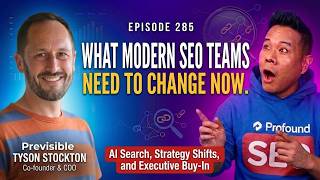
SEO Reporting: Leading the Internal Search Narrative | Tyson Stockton
Tyson Stockton

LLM SEO: Track What AI Says About Your Brand | Bernard Huang
Bernard Huang