
Entity SEO and Index Bloat Explained | Dixon Jones
With Dixon Jones, CEO of InLinks · Streamed live · 63 min
What this episode covers
Dixon Jones, CEO of InLinks, explains entity SEO and how Google's NLP API can reveal the entities competitors cover. He also covers index bloat, arguing that category and tag pages waste crawl budget and should be consolidated into around five to ten well-defined categories. The main conclusion is that entity coverage and cleaning up low-value URLs both support long-term search growth.
Key takeaways
- ✦Consolidate category and tag pages to around five to ten well-defined categories.
- ✦Use crawl stats and Screaming Frog to see crawl budget spent on low-value URLs.
- ✦Run competitor pages through Google's NLP API to extract the entities they cover.
- ✦Add jump links on question-based pages to help win sitelinks in search.
- ✦Build your network at conferences and events, which supports long-term growth.
Key moments
- 19:00Using Google's NLP API
“you could put your main competitor pages or people are competing with you into that”
- 26:43Dixon's Early Business Start
“i basically turned my gaming hobby into a into a business”
- 34:03Majestic and Link Intelligence
“i've been a majestic user since i think about 2011”
- 45:44Entity Categorization and Gaps
“we've got this categorization of entities as well which is turning out to be pretty useful”
- 56:49Building Your Professional Network
“the network that you build up is what's going to see you through to the end”
Quotes are from the episode transcript, lightly cleaned of auto-caption errors.
Questions answered in this episode
- How can I find the entities my competitors cover?
- Put competitor pages into Google's NLP API, which extracts the entities it sees in the content. Then identify the gaps where your content should also cover those entities.
- How do I reduce index bloat?
- Consolidate category and tag pages down to around five to ten well-defined categories. Audit them, since low-value category and tag URLs can waste crawl budget.
- How can I get sitelinks in search results?
- Add jump links on your pages, especially question-based ones, and possibly get sitelinks in search. Dixon says jump links often come from keyword research that includes questions.
More episodes on Content & On-Page SEO

Zero-Click Marketing: Influence Before the Click | Amanda Natividad
Amanda Natividad

Content Strategy for Enterprise SEO | Angela Clark Wilson
Angela Clark Wilson
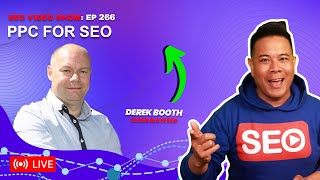
PPC for SEO: Using Paid Data for Keywords | Derek Booth
Derek Booth

B2B Content Marketing: Top-of-Funnel Still Matters | Monty Montgomery
Monty Montgomery

Jobs to Be Done Framework for Marketing | Jordan Fowler
Jordan Fowler

SEO Course for Beginners | Ștefan Prohnițchi
Ștefan Prohnițchi